 Attention Activity
The Global Connector
Imagine you're dropped in a busy airport halfway across the world. You need directions, a coffee, and a phone charger. What language will most people have in common?
English is spoken by over 1.5 billion people worldwide. It's the bridge that connects us.
Try this quick experiment:
The Basics: Greetings
Greetings are the first step to starting a conversation. Formal greetings are used in professional settings, while informal greetings are for friends.
The Basics: Introductions
After greeting someone, the next natural step is to introduce yourself. Keep it simple and clear.
"Hello, my name is..."
Knowledge Check
Which phrase is correctly used to introduce yourself?
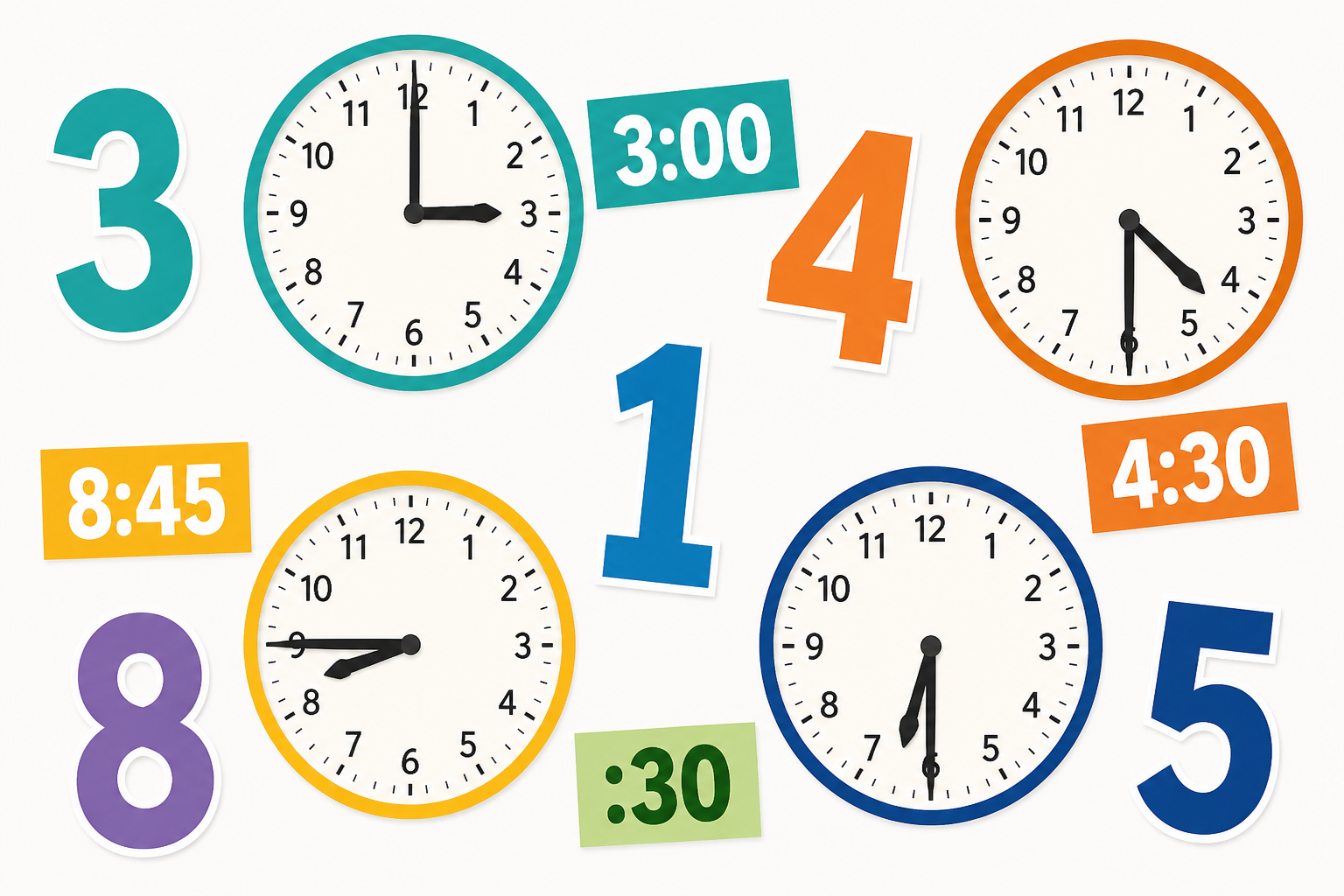
Numbers & Time
Numbers are essential for buying things, giving phone numbers, and telling time.
Click to hear the times spoken aloud:
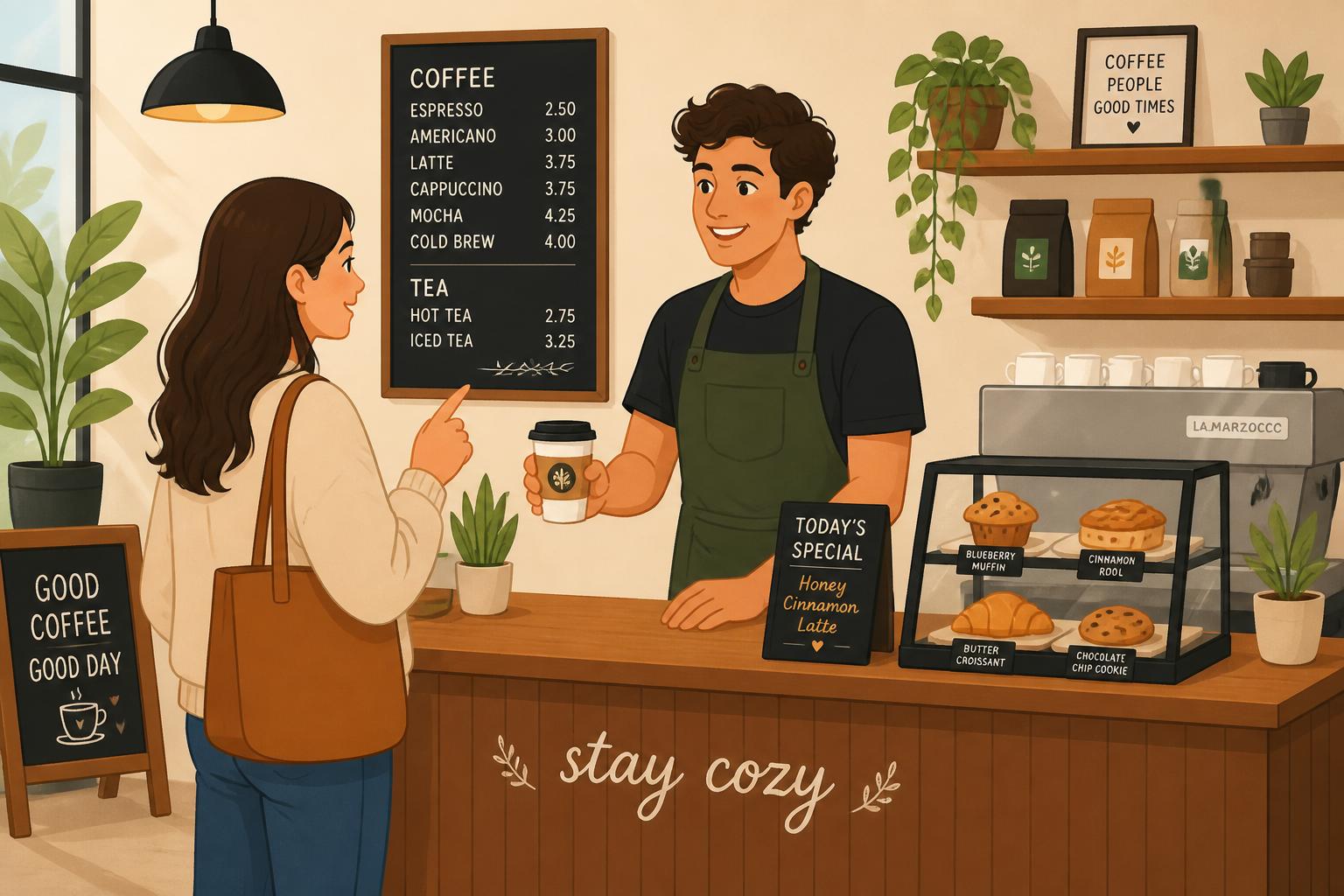
Food & Drink
When dining out, politeness is key. Always use "please" and "thank you" when interacting with staff.
- I would like... - The polite way to state what you want.
- Can I have... - Another polite way to order.
- The menu, please. - When you need to see options.
Activity: Ordering at a Cafe
Complete the conversation with the barista by selecting the most appropriate and polite response.
Knowledge Check
What is the most polite way to ask for the bill at a restaurant?
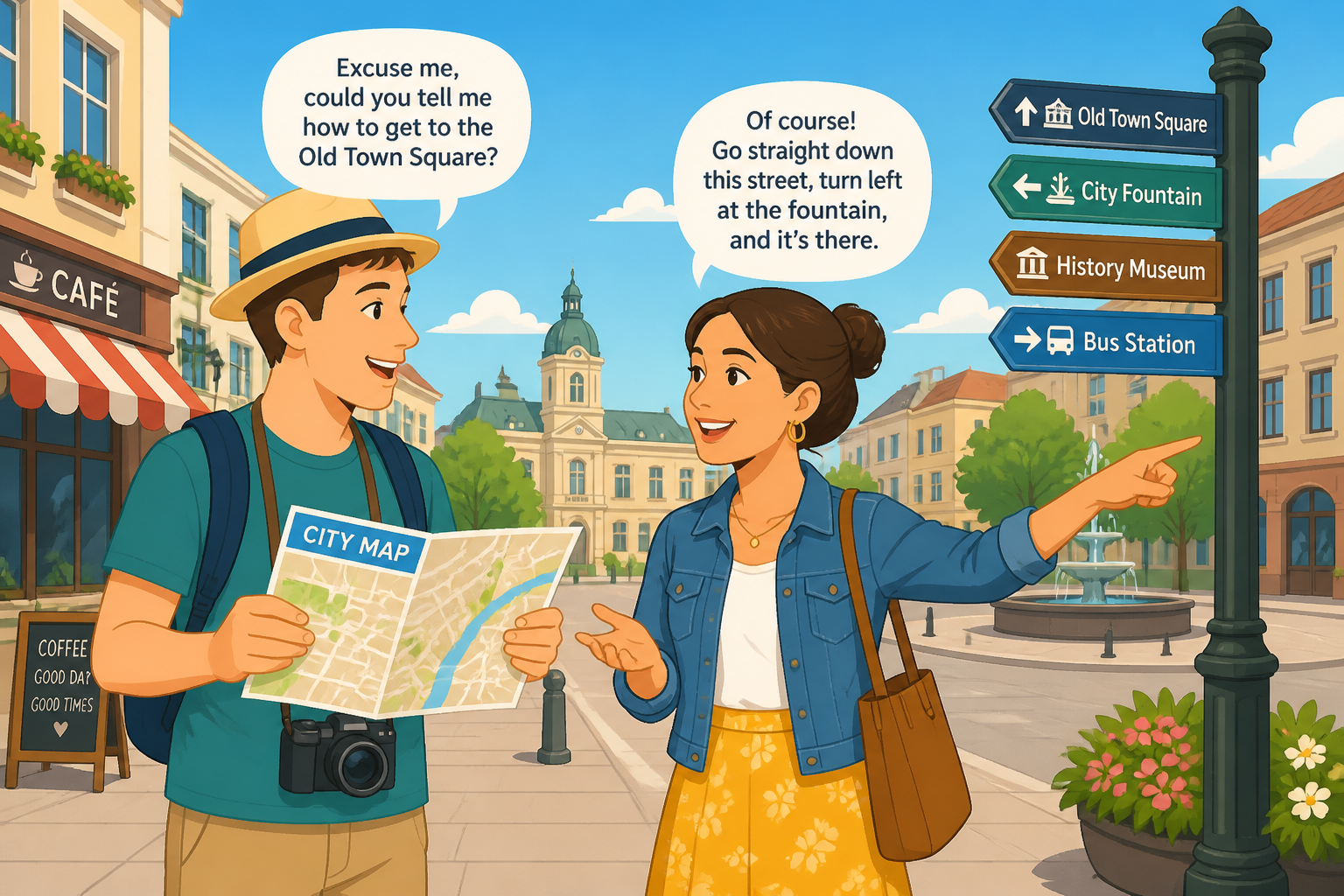
Asking for Directions
When you need help finding your way, start with a polite apology for interrupting ("Excuse me"), then state your request clearly.
Phrase Formula:
"Excuse me" + "where is the..." + [Location] + "?"
Common Verbs
Three verbs make up a huge portion of English conversation: to be, to have, and to do.
To Be
I am
You are
He/She/It is
To Have
I have
You have
He/She/It has
To Do
I do
You do
He/She/It does
Knowledge Check
Which verb correctly completes this sentence: "I ___ a question"?
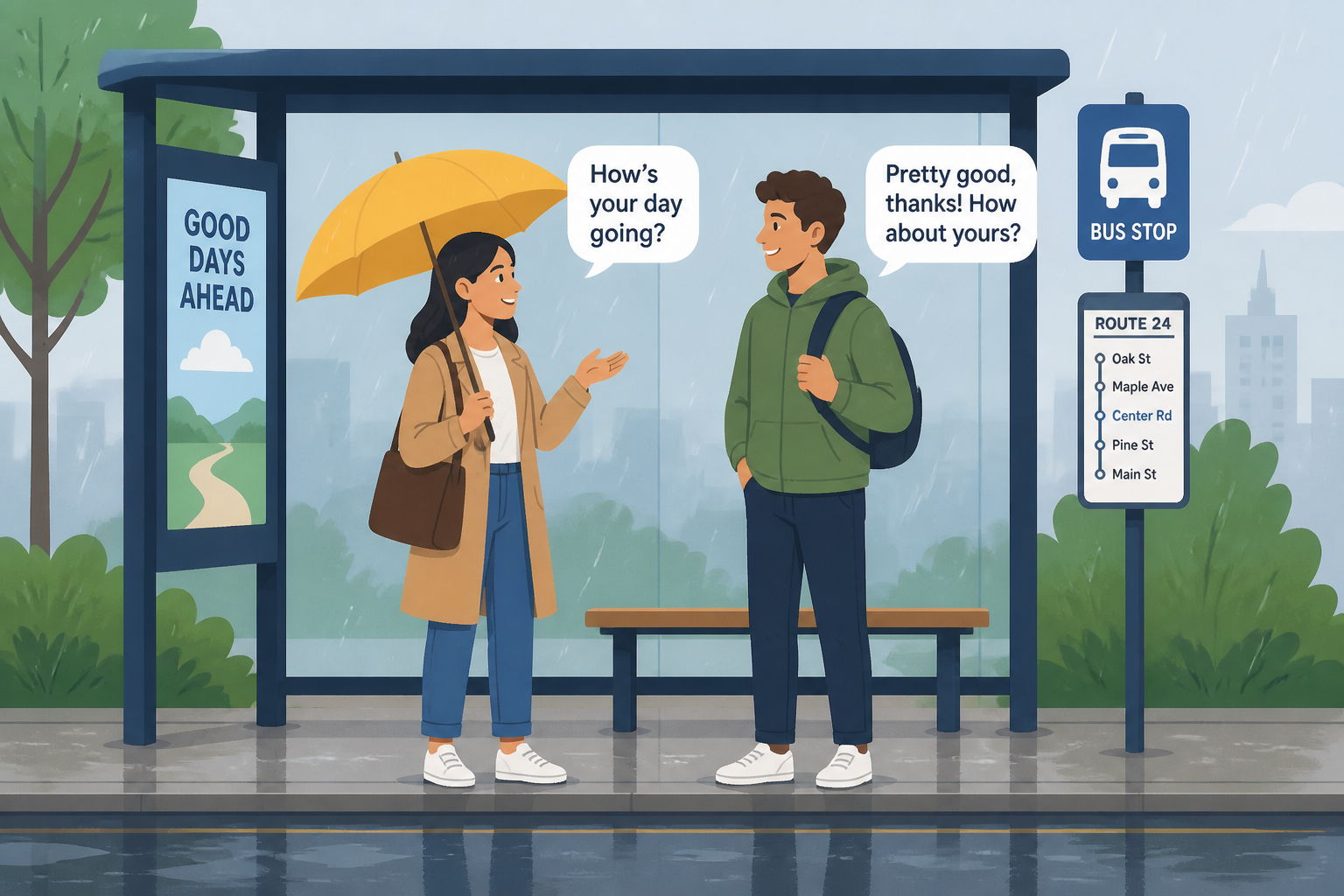
Small Talk & Weather
Small talk builds connection. The weather is a safe and common topic everywhere in the world.
Listen to common remarks:
Expressing Feelings & Opinions
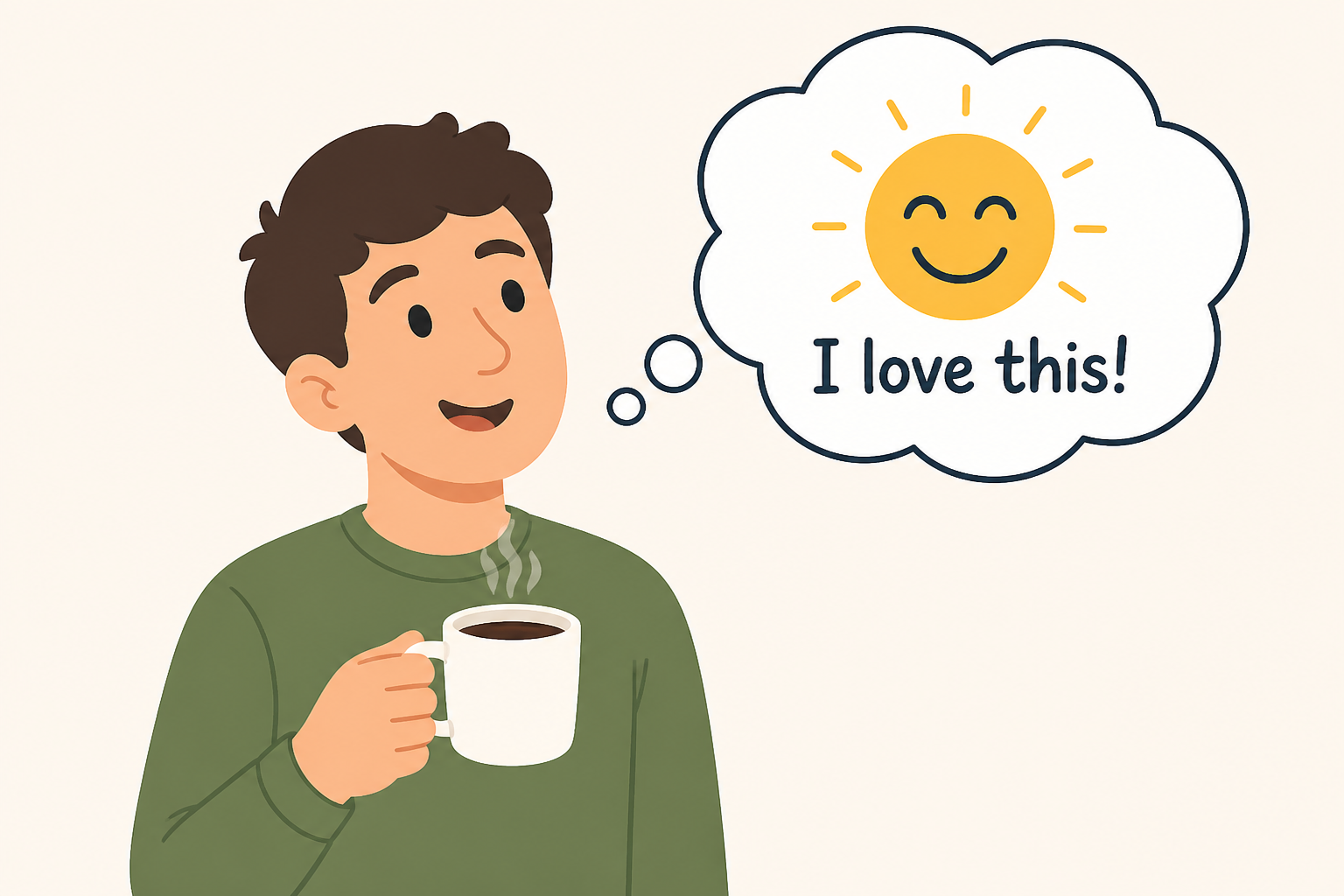
To have meaningful conversations, you need to express your own perspective using "I" statements.
Pronunciation Tips
English spelling can be tricky, so paying attention to how native speakers stress certain syllables is important. The stressed syllable is spoken slightly louder and longer.
PHO-to-graph vs pho-TOG-ra-phy
PRE-sent (Noun) vs pre-SENT (Verb)
Activity: Tongue Twisters
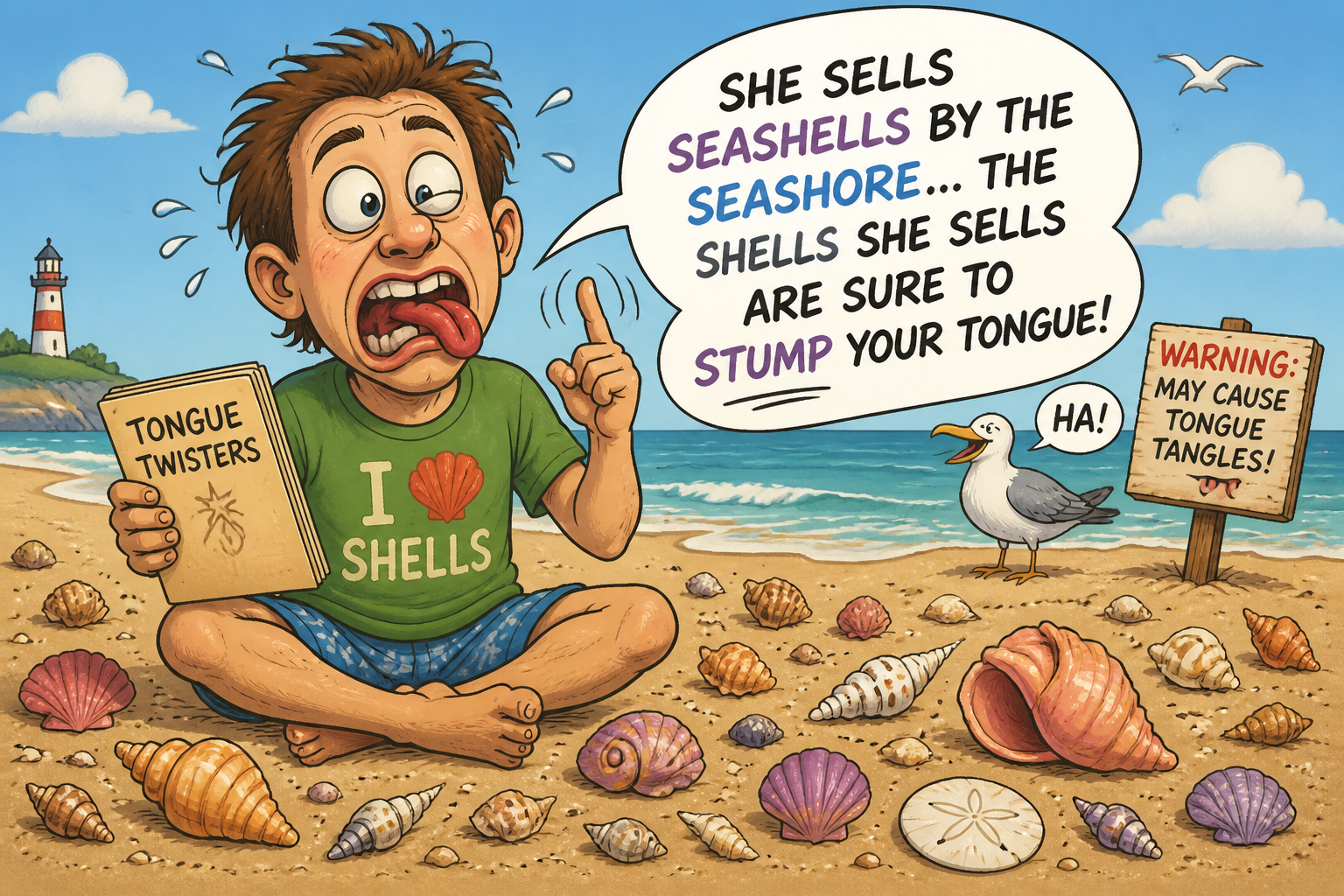
Tongue twisters are a fun way to improve your articulation and train your mouth muscles for English sounds.
"She sells seashells by the seashore."
Summary: Key Takeaways
- Greetings: Use polite forms like "Good morning" or "Hello, how are you?".
- Ordering: "I would like..., please" is the best way to request items.
- Directions: Always start with "Excuse me" before asking "Where is...?".
- Verbs: Master "to be", "to have", and "to do" as they form the core of sentences.
- Small Talk: The weather is a perfect, universal topic for starting a chat.
You are now ready to test your knowledge.
Ready for the Assessment?
You will now answer 5 questions to test your understanding of English speaking basics. You need an 80% to pass.